+212 710 029 690
info@deserttourmarrakech.com
TripAdvisor Traveler's Choice

Planning a solo trip to Marrakech can feel like booking a ticket to two places at once: a dreamy city of lantern-lit courtyards and rooftop calls to prayer, and a busy maze where you worry about getting hassled.
Here’s the honest answer: Marrakech is generally safe for a single woman, but it can be intense. The most common issues aren’t violent crime, they’re catcalling, pushy sellers, small scams, and pickpocketing, especially in the medina and big tourist spots.
This guide is practical, not fear-based. Most problems are annoying, not dangerous, and a few simple habits (clear boundaries, smart routes, and calm transport choices) make a huge difference.
For January 2026, the day-to-day reality in Marrakech is steady: solo women visit in large numbers, and most trips go smoothly. What makes people hesitate is not a high risk of serious harm, it’s the friction. You’ll likely get comments in the street, you may be approached repeatedly in the souks, and you may deal with people who insist on “helping” you.
Based on current reporting and traveler patterns, violent crime against tourists is uncommon. The bigger risk is petty theft in crowds (phone snatching, pickpocketing) and tourist-focused scams. Police presence is strong in major visitor areas, and tourist police are used to handling visitor problems quickly.
A helpful way to think about it is the difference between feeling unsafe and being unsafe. Marrakech can feel overwhelming because it’s loud, fast, and full of strangers interacting with you. In the medina, streets tighten into alleys, scooters pass close, and people approach you constantly. That sensory pressure can make your alarm bells ring even when your actual risk is low.
If you want a solo-woman perspective to compare experiences, this female traveler safety guide to Marrakech matches what many visitors report: lots of hassle, very little true danger, and better days when you plan your basics.
Most “bad moments” follow predictable scripts:
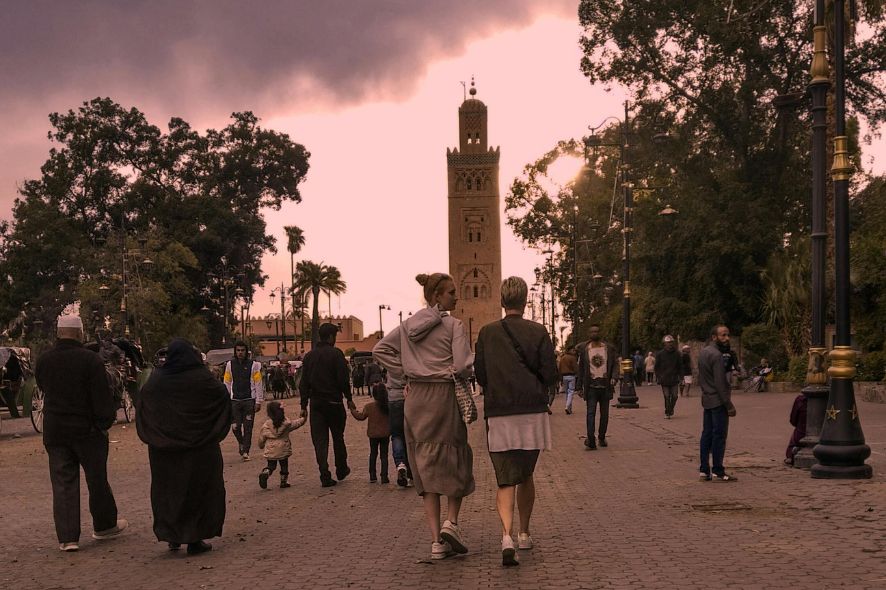
Catcalling and comments happen in and around the souks, near Jemaa el-Fnaa, and on routes where tourists wander slowly. Sometimes a man walks beside you asking questions or trying to steer you somewhere. It can feel personal, but it’s usually opportunistic.
Scams are also common. The big ones: a stranger offers to guide you to your riad, a “friendly local” insists a street is closed, or someone leads you toward a shop where they earn commission. Taxi overcharging is a classic, too.
Then there’s crowd theft. A quick distraction, a hand in an open tote, or a phone grabbed when you’re filming the square.
What to do, fast: ignore, say a firm no, and keep moving. Keep valuables zipped, don’t follow strangers into side alleys, and don’t stop to debate. Your attention is what most persistent people want.
Marrakech isn’t one uniform vibe. Many solo women feel calmer in modern neighborhoods like Gueliz and Hivernage, where streets are wider, cafés are relaxed, and walking feels more familiar.
The medina is where you’ll see the “Marrakech intensity” people talk about. It’s busy, beautiful, and sometimes exhausting. Staying in a well-reviewed riad near active routes can feel secure because there are more people around and more eyes on the street. The uncomfortable spots are quiet lanes, poorly lit corners, and late-night wandering when the crowds thin out.
You don’t need to avoid the medina, you just need to treat it like a busy market anywhere: go in with a plan, keep your pace, and save exploring the deeper alleys for daytime.
Safety in Marrakech is mostly about reducing hassle. Think of it like wearing sunscreen: you’re not expecting disaster, you’re preventing the predictable stuff.
Start with how you move through the city. Walk with purpose, even if you’re unsure. If you look lost, you become a magnet for “helpers.” Save your riad location offline on your phone, and check directions inside a shop or café instead of stopping in the middle of a narrow lane.
Boundaries matter more than perfect manners. Polite is fine once. After that, short and firm works best. Avoid long eye contact with someone who’s persistent, and don’t smile as an apology if you want the interaction to end. You can be respectful without entertaining a conversation.
Be smart with your money and phone. Marrakech is a place where you’ll take photos constantly, which is exactly why phone snatching happens in crowds. Keep your grip steady, don’t set your phone on café tables near the edge, and use a bag that closes.
If someone follows you, treat it like a simple problem with a simple fix: change your path toward people. Step into a busy shop, a café, or a hotel lobby. Stand near families or groups of women. If it continues, ask a staff member for help, or call your accommodation. A good riad host will not shrug this off.
If you want a general pulse check from women travelers, the Marrakesh women’s safety overview can be useful context, especially for what people experience in crowded areas.
In Marrakech, dressing modestly isn’t about blame, it’s about lowering the volume on unwanted attention. Covering shoulders and knees often gets you fewer comments, and it can help you feel more comfortable in religious or traditional areas.
A simple setup that works:
Add a phone strap or grip if you use your phone one-handed. It’s a small change that can prevent a bad day.
For taxis, the lowest-stress move is using your accommodation to arrange one, or asking a restaurant to call a trusted driver. If you hail a taxi, settle the price before you get in, or insist on the meter where it’s available. If the conversation turns into an argument, it’s okay to step away and take the next one.
At night, treat Marrakech like any big tourist city: stick to well-lit main routes, avoid quiet shortcuts, and don’t wander aimlessly looking for your riad door. The medina can get confusing after dark, even if it felt easy in daylight.
Day tours can also be a comfort option. You get transport handled, you avoid “where are you going” conversations, and you can enjoy places like the Atlas foothills without the logistics stress. If you’re collecting practical tips beyond safety, this guide on things women should know about Marrakech has good, experience-based notes on handling day-to-day moments.
Most issues are fixable in minutes if you act early. Don’t wait for a situation to “prove” it’s serious. If your gut says leave, leave.
For harassment, your goal is distance, not victory. Get yourself to a public place, ideally with staff. For scams, your goal is to stop the conversation. You don’t need to justify why you’re not interested. For theft, your goal is speed: lock down accounts, report it, and move on.
Use your accommodation as your support hub. Riads and hotels deal with tourist problems daily. They can call a taxi, tell you the simplest route, and advise whether something should be reported.
If you need police help, tourist police are a real option in Marrakech, and the emergency number commonly used is 190. Keep it saved, along with your accommodation’s WhatsApp number.
Keep it short, calm, and repetitive:
Say “No, thank you,” and keep walking. Repeat once if needed, then disengage fully. Don’t argue, don’t explain, don’t negotiate.
If the person keeps pace, change the setting. Step into a shop, stand near a family, or approach a café counter and ask for help. Confidence and speed usually end it faster than a long conversation.
If something is stolen, contact your accommodation first so they can translate, advise, and help you act quickly. If it’s serious or ongoing, contact tourist police.
If it’s safe, note the basics: time, location, and a description. Cancel cards right away and contact your bank. If your phone is gone, lock it remotely if you can, then replace your SIM when you’re ready.
Petty theft is the main risk. Quick action keeps it from turning into a trip-ending headache.
So, is Marrakech safe for a single woman? Yes, in the way most major tourist cities are, but with more unwanted attention and more frequent small hustles. The biggest challenge is usually stress and annoyance, not violent crime. Choose calmer neighborhoods when you want a break, plan your nights, keep your phone and bag secure, and use firm boundaries when you need them. Prepare a little, act confident, and you’ll likely come home with great memories and a stronger travel muscle.